|
|
|
Seventh installment, copyright 2025, by Dean Adams Curtis
Chapter 36 The Tribune of Manila newspaper now has a Japanese editor. Armando Malay, a Filipino reporter for the Tribune, who has been living in Japan, travels with former Philippine General Artemio Ricarte, a revolutionary leader who has also lived in Japan. While Ricarte has resided in Japan, which has been ever since the end of the war for independence from the Americans that had followed the Spanish American War, he has been employed as a Spanish language teacher. Both men, Armando and Artemio preferred living in Japan to being under U.S. colonial rule. They arrive for a visit outside the Kawit, Cavite home of former general and first president of the Philippine Commonwealth, Emilio Aguinaldo. Ricarte and the reporter look at one another. "Nakahanda?" Ricarte asks the reporter if he's ready. "Handa." Inside the Kawit, Cavite home of the former president, the three men exchange handshakes. In front of his watching Aguinaldo family members and household staff, varied pleasant words are exchanged about the beauty of the location. A couple minutes later the three men sit on a shaded patio and are served ice tea. "I heard you have been teaching Spanish classes in Japan," Aguinaldo notes. "Oo, and I have heard you have been collaborating with our American colonizers," Ricarte parries. "I have been disappointed in you during the postrevolutionary period. Capitulated to a new colonizer." "Oo, and you have stayed away in the land of a foreign imperial power." "Fellow Asians, General Aguinaldo," Ricarte says, "not Europeans." "A distinction without a difference," Aguinaldo replies. "I felt we needed to be flexible. As you may have heard, far off in Japan, we held elections. I have been president. We have been a democracy. I lost in 1935 to Quezon. I respected the votes of our people. And I have felt, and still feel, that America will soon make good for the actions of its oligarchs here in our land." "Mito," the Tribune reporter, Armando Malay, says, calling the concept a myth. "I am sure you both heard Quezon's address," Aguinaldo continues, "assuring the people of the United States that we Filipinos realize that this war is being waged to preserve democracy and to secure for all peoples the essential freedoms proclaimed by President Roosevelt." "Oo," the Tribune of Manila reporter orates, his tone mocking. "The Philippines is today the beleaguered citadel of liberty. But, we are determined to defend it to the end.' Yes, Mr. President, that was just before he tucked under MacArthur's wing and went to nest on the rock in the bay." "Aguinaldo, namumula ang aking mukhang nababatid kong si ekow," Ricarte says, noting that his face turns red in fury at the thought that his former leader is a puppet being playfully manipulated by lordly Americans. "Ay pawang manekang linalaro-laro lamang niyang mga makaharing Amerikano." Conversation of the three men center on what Ricarte states the Japanese expect from the former president. Aguinaldo is non-commital. After a half hour of back and forth dialog, he motions his guests toward the door. On the way there, Ricarte's eyes fall on the American flag, as well as on a silver framed photograph next to it of U.S. President Franklin Roosevelt. "Malungkot," Ricarte comments the display is sad. He tells his former leader that he can soon expect a visit from a representative of the Japanese high command, and that the display will not be well received. "Artemio," Aguinaldo shakes his guest's hand, and remarks that it has been good to see an old friend. Several days later, Japan's Kaneshiro Ota visits Aguinaldo. He accompanies Japanese Lieutenant General Nara, and a white-suited Japanese sophisticate whose oblique references give the former Philippine president a chill. Ota spots a picture of Japanese Emperor Hirohito in a silver frame, centered above a samurai sword. He points it out to Nara and the white-suited man. "I was given that sword by Tsuyoshi Inukai," Aguinaldo tells Nara and Ota, as he observes the white-suited man smiling at his daughter. "He helped our Filipino revolutionaries."
Chapter 37
Penelope Bloom recalls he told her he was in the U.S. Army Signal Corps. The night before, Kim Chee had driven her from her home in the light green 1940 Rambler wagon he had stolen, into the the South Central Sierra Madre mountains east of Manila. He had taken Penelope to where he and his small team had set up their base camp. She looks out across a misty-bottomed mountain valley. Though she is worried about her husband, she is relieved to be under protection of the half dozen men of the U.S. Army team led by Chee. He had strictly refused her information that, he said, would jeopardize others if she was caught and tortured. That day, Chee had gone up a mountain with another man to set up a watching and signaling outpost. While he was gone, none of the other men talked with her. They were both verbally and radio silent, each engaged in his own tasks of cleaning, cooking, or writing. She wanders to a nearby stream and washes up, marveling at being in mountains she had not realized were so near Manila. Other thoughts intrude. Terrifying recall of shocking sights within her home the prior evening. She pushes those images away by recalling her Ohio courtship with Tony. She tells herself he is a man who can take care of himself. Then she recalls what Chee had told her about Tony exporting opium. She wonders how long it has been going on. "Magandang araw," says a woman's voice behind her. Persephone jumps, startled, then jumps upright. "Magandang araw," Persephone regains her composure and quickly replies to the older Filipina in Tagalog, using the words for 'good day' that Maria of Sukimoko had taught her. "You know Tagalog," says the woman in perfect English. "And you know English," Persephone notes. "Is that so surprising?" askes the woman flashing her a friendly smile. "Suppose not," Persephone smiles back bashfully. "It is your second language here, after all. You just speak so, so..." "Much like a native born English speaker," the woman completes Persephone's statement. "Yes," Persephone answers. "Thank you. I spent my late teens and college years in the United States," says the woman. "University of Washington." "D.C.?" Persephone questions. "No, I don't believe there is a University of Washington D.C.," the Filipina answers her. "I went to the University of Washington in the State of Washington. And you?" "Ohio," she tells the woman. "State of Ohio. As in Ohio State, as opposed to our rivals, the University of Ohio." "I see." Persephone notes the woman has no wedding ring on her finger. "Miss?" "Aling Rosa," the Filipina replies. "A pleasure to meet you, Miss Rosa," Persephone says. "What was your major?" "You first." "Linguistics." "Impresssive," Aling Rosa replies. "I was in school in the 1920s you understand. As an Asian woman in a white male American university, I followed the only course of study in science made available to me. I earned my masters degree in food and nutrition sciences." "Masters. Impressive also," Persephone says. "Sorry, I would tell you my name but then one of these men would probably have to shoot you, or me, or both of us, who knows. Right now my life is upside down." "As with all of ours these days. I know who you are, Mrs. Persephone Bloom," Aling Rosa states. She sees the American beauty's lower jaw drop in shock, then quickly closes with her to take each of her hands in her own. "You Americans are guests in my valley. Family land, you know about that. I understand your grandfather has substantial land in southwestern Ohio." "I will say it again," says Persephone, "You are impressive, Miss Rosa." "Thank you, Persephone," Aling Rosa then points toward the other Americans. "I brought you and the boys pork adobo and rice." She steps back up a trail from which she had appeared, then returns with two baskets, followed now by a billy goat. "You ought to eat. I must go and feed this little one." Aling Rosa scoops up the goat in her arms and disappears. When Persephone and the American guys are eating, Kim Chee returns, alone. Persephone assumes the other man who left with him is posted somewhere on a mountaintop. Chee eats too, quickly, ravenously. Then, all except the men who stand watch, seek breezy shade and sleep. The next morning she is first up and puts on local dress Chee has given her. When he awakens, he asks her to disguise herself further. "Put your hair up." When she does, he hand her a red bandana. "Wrap this around your head." He then gives her a wide brim straw hat. When she puts it on, she is surprised at how comfortable she feels. Chee then disguises himself in a Japanesese army shirt, pants, boots and cap. She gets a surprise when he opens up the trunk of the Nash Rambler and lifts a blanket. An unconscious man in a black suit is bound and gagged within it. "Japanese Naval Intelligence Captain, Yoshi Imai," says Chee. "I injected him with something to make his ride more comfortable." He guides her into the back seat of the Rambler. "If I say get down, duck below my seat. If we are stopped, don't speak. If asked, I will say in Japanese that you are my concubine. Just play sullen. Do not make eye contact." Persephone inquires where they are going. "East," Chee replies. He slips the stick shift of the light green 1940 Rambler wagon into first gear, eases a foot off the clutch pedal, and onto the accelerator pedal. As they depart, the Rambler tires kick up a dust cloud beyond which they disappear.
Chapter 38
Maria stands with a forearm casually rested on top of her cash register inside Sukimoko in Polo, talking with her cousin, Irene, along with Conception, her 16-year-old daughter, who had left their rice shop across the street, as she often did when she had no customers, to talk with her cousin. Irene has been worrying about the whereabouts and health of her eldest daughter, Juanita, who she had not seen for almost two months. When Irene pauses her stream of thoughts, Maria's mind pops up with a wonder as to the whereabouts of Persephone Bloom, who vanished the week before. "I went past the Bloom house," Irene tells Maria. "Her neighbors told me the Japanese had become extremely interested in the home." She continues by telling Maria the Japanese had encamped guards at the house, who remained posted still, day and night, as if something really valable was inside. Maria's two boys, Francisco the elder, and his usually energetic younger brother, Emiliano, enter Sukimoko, uncharacteristically slow. Emil steps between his mother and Irene. Maria senses he had done, or thought he had done, something wrong. But what? Francisco held the burlap bag she had given him. It was filled with persimmons, just as she had asked. Behind the boys, a handsome, white-suited, Asian man enters. Maria cannot place his nationality. He smiles a charming smile. "Sukimoko." She smiles and nods back to him. He browses her items for sale. "Sukimoko. Nihongo, desu ka?" He realizes she does not understand his question. He was just checking. He had asked if Sukimoko was Japanese. Since he is not yet fluent in the Tagalog language of Luzon, Philippines. He asks his the question again, in English. "It sounds like a Japanese word, but if it is one I do not know it." "It is a name I made up by putting together two Tagalog words, those for good and deal." "Inventive of you." "Thankyou," Maria says, and notes that both of her boy's eyes remain locked on the white suit, who she now realizes is a worldly Japanese gentleman. She sees her boys both have fearful looks on their faces. Maria looks to Irene. She wishes in one moment that her husband was with her, and in the next is happy that he is not. "Tell me," White Suit commands, as he simultaneously looks at young Conception's body. "When was the last time you saw your customer, Mrs. Persephone Bloom?" A chill runs through each cousin's spinal columns.
Chapter 39
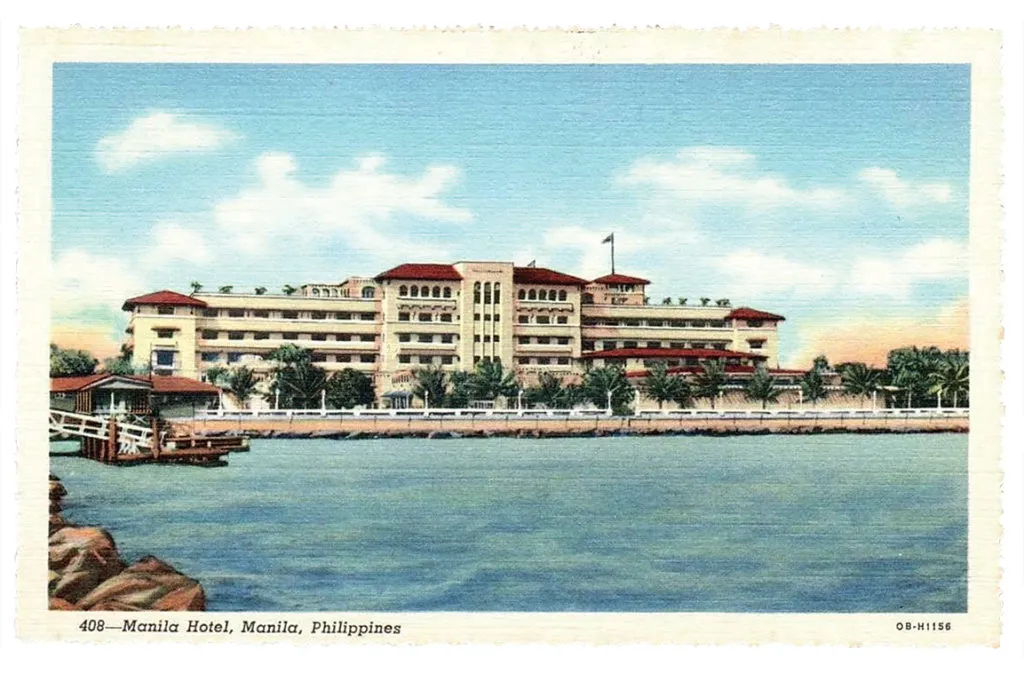
Christina Ortegas, the Filipina beauty, who had once thought herself wealthy, has found that she is now broke. She had found her home empty and open, with her jewelry gone and staff nowhere around. She had checked her bank accounts and had discovered them empty as well. After that she had immediately talked herself into a job. What's a girl to do? Christina makes her way from the kitchen of the Manila Hotel carrying a tray of plates loaded with food into the dining room. There she rounds a table of German engineers and past a table of Japanese officers. She lays the tray upon a stand her assistant waiter has set next to the table of a Japanese general with a toady-looking face seemingly in perpetual frown. The general seems to take no notice of her as she serves plates to him and his staff of high ranked officers at his table. On her way back to the kitchen, one of the German engineers reaches out and grabs one of the cheeks of her bottom, giving her such a start, she lets an exclamation escape her throat. She turns to see the table of German's laughing. After she has hurried back into the kitchen, a coworker urges her to a round window in the kitchen door. When she takes over the glass view portal she sees two Japanese officers demanding that the German who had grabbed her stand up. Then they escort him from the restaurant. Though she does not know how the man's expulsion has come about, she is relieved to see it happen. Toward the end of her shift at the Manila Hotel, Christina enters an elevator with a tray of food, responding to a room service request from the penthouse. The elevator has two Japanesese soldiers aboard, operating and guarding the elevator. As it ascends, her thoughts swing to Tony, Anthony Bloom. She recalls on varied occasions hearing him tell people his pitch line. I'm bringing elevators to Asia. She realizes she is riding on the first and only elevator Tony had managed to have installed in the Philippines. Neither of the Japanese soldiers look at her. Each stares straight ahead into the elevator cab's walnut paneling. Tony Bloom had been her project. Win him over. He would divorce. She would marry him. Someday thereafter, they would move to America. She now realistically reassesses that project's prospect for success as near nill. A hidden bell dings as the cab of the elevator arrives at the penthouse level. A light comes on behind the button labeled P. Neither soldier moves. She steps from the elevator into a quiet hallway. One of the high ranking Japanese officers who she had seen downstairs at the general's table is there and guides her down a hall. He opens the door into the penthouse suiet. She settles her tray on a sideboard table in the dining room. The officer gives her a command she does not understand, but points around in such a way as to inform her she is to stay and serve. Then, he leaves the room. She peeks around a door frame to the living room and sees him ordering other officers up from seats and desks. He then ushers them out the door. What is going on? A concept appears on her brain screen. A moment later she hears something behind her. She turns to see the frowning general seating himself at the head of the dining table. 


Another site from studioinastudio |